
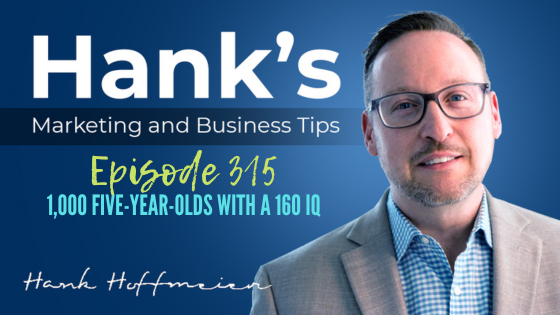
We have all been there. You look at your quarterly dashboards, see a spike in sales, and someone in the room immediately claims credit for their favorite marketing campaign. But what would have happened if you never ran that campaign at all? In this episode of the HMBT podcast, I sit down with James Sun, CEO and co-founder of Kapnova, an MIT Sloan MBA, and a three-time venture-backed founder. James pulls back the curtain on how seven-figure enterprise bets are routinely made on pure correlation rather than true causation, and how smart business owners can use AI agents to orchestrate better, outcome-driven decisions every single week.
The Pitfalls of Attribution Theater and Static Reports
Traditional business intelligence systems and dashboards are designed to look exclusively in the rearview mirror. They show what happened, what revenue came in, and what margins were achieved, but they fail to answer the counterfactual questions: Would your customers have purchased anyway without that discount? Did that creator deal actually drive net-new revenue, or did it merely capture existing demand? Large brands often shell out hundreds of thousands of dollars for annual marketing mix modeling (MMM) reports that sit static on a shelf. James explains how businesses can now shift from infrequent, backward-looking reports to dynamic, agentic models that help teams make sharper decisions continuously.
LLMs, Probabilistic Models, and Causal Inference
While AI tools like ChatGPT and Claude are powerful, business leaders need to recognize what they can and cannot do. LLMs are probabilistic models designed to guess the next word or project an existing trendline forward. They do not automatically understand business context or causation. James shares a memorable analogy: an LLM is like having a room of a thousand five-year-olds with 160 IQs. Left alone with an open-ended goal like “make me more money,” they will create chaos, like discounting your coffee shop’s prime morning items by 50% without understanding margin cannibalization or customer lifetime value. True business success requires human judgment and structured orchestration to guide these tools toward specific, bounded objectives.
Practical AI Habits for Growing Businesses
You do not need an enterprise budget or a fleet of in-house data scientists to benefit from advanced data practices. For small business owners and solopreneurs, simply exporting your weekly Shopify or transaction data and feeding it into Claude or ChatGPT to identify weekly patterns can unlock immediate clarity. To get the best out of these tools, interview them back: ask the AI to prompt you with the ten critical questions a senior data analyst would ask before reviewing your numbers. At the enterprise scale, organizations must implement orchestration layers, memory tracking, and statistical guardrails like Monte Carlo simulations to ensure autonomous agents stay safely within approved financial boundaries.
Key Takeaways
- 🎭 Stop Playing Attribution Theater: Relying solely on last-mile attribution creates false confidence. Measure counterfactuals and run simulations to see what would happen if a campaign never ran before sinking more capital into it.
- 🧒 Orchestrate Your Brilliant Five-Year-Olds: AI models have incredible raw processing power, but they lack human judgment and business context. Assign individual bots to tightly defined tasks and maintain human oversight over strategy.
- 📊 Shift from Past Dashboards to Causal Insights: Traditional analytics only show historical correlations. Focus on causal inference to identify what truly moved the needle and strip out seasonal noise.
- ☕ Build a Simple Weekly Data Habit: You do not need complex tech stacks to start. Export your weekly sales spreadsheets, upload them to your favorite LLM, and prompt it to search for customer purchase trends and basket-size improvements.
- 🛡️ Establish Organizational Guardrails: Handing out software licenses is not an AI strategy. Companies must create memory layers and strict quantitative intervals so AI tools cannot suggest reckless budget allocations.
- 🌐 Simulate Before You Spend: Advanced open-source initiatives and econometric models allow teams to test ad copy and campaign ideas against simulated populations, avoiding costly trial-and-error in real ad accounts.
Conclusion
If you want your business to grow, you cannot afford to leave your data strategy to guesswork and vanity metrics. Take a closer look at what actually drives your conversions, set up clear guardrails for your workflows, and start putting these tools to work systematically. If you enjoyed this conversation, be sure to subscribe to the HMBT podcast, share this episode with a fellow entrepreneur, and leave a review on your favorite listening platform!
📧 If you’re looking for a cost-effective transactional and broadcast email platform, check out Anypost.
🤓 For ongoing business growth discussions, join our community at SMB Marketing and Business Tips on Skool.
Check out Kapnova: https://kapnova.com/
Audio:
Podcast: Play in new window | Download
Subscribe: Email | TuneIn | RSS