

I cannot tell you how many times a marketer or business owner has walked up to me after a conference presentation and said, “Hank, my email platform says my delivery rate is 98%, but my opens and conversions are completely in the gutter. What is going on?”
My answer is usually the same: you are confusing delivery with deliverability.
It is one of the most common misunderstandings in our industry. Having your email accepted by a receiving server is only half the battle. If that message lands straight in the spam folder or the promotions tab instead of the primary inbox, nobody is going to read it. Good or bad deliverability can truly make or break your entire email marketing program.
Let’s break down what email deliverability actually means, how mailbox providers view your brand, and how you can spot and solve deliverability issues before they wreck your revenue.
Delivery vs. Deliverability: What Is the Difference?
To get your email strategy on track, you first need to understand the distinction between these two terms.
- Delivery Rate: This measures whether the receiving mail server accepted your email. If you send 1,000 emails and 980 of them do not bounce back, your delivery rate is 98%.
- Deliverability (Inbox Placement): This measures where that accepted email actually lands. Did it make it to the primary inbox, or was it sent straight to the spam folder?
Think of delivery as getting through the front gate of a gated community. Deliverability is whether the security guard invites you inside the house or leaves you standing out in the driveway.
Technically, the spam folder is still considered “delivered” by most email service providers (ESPs). But if your audience never sees the message, that 98% delivery rate is just a vanity metric.
How Mailbox Providers Measure Your Reputation
Mailbox providers like Gmail, Yahoo, and Microsoft (Yahoogle) process billions of messages every single day. To protect their users, they use complex filtering algorithms to score your sender reputation.
Your deliverability is essentially the essence of karma in the mailbox: do good things, and good things will happen to your inbox placement.
Here are the primary factors that inbox algorithms evaluate:
1. Technical Authentication
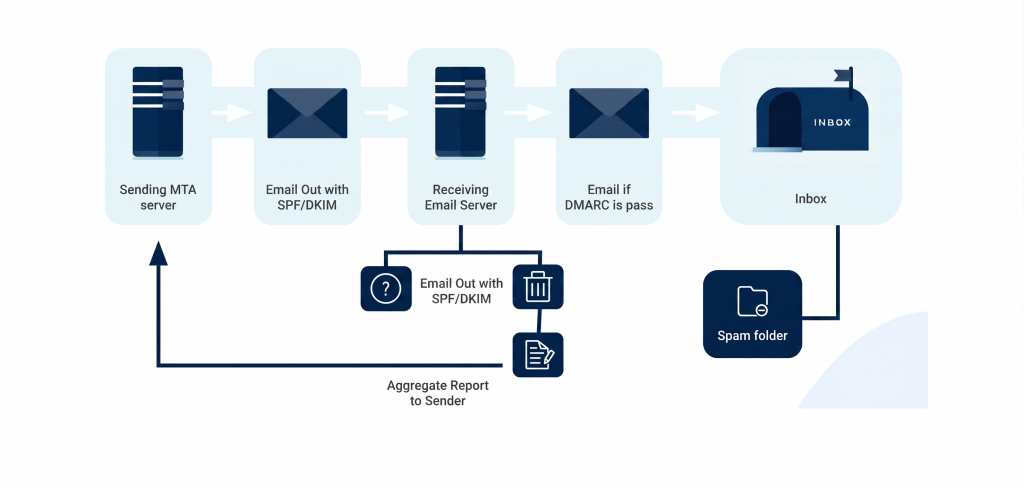
If you do not have your authentication protocols properly set up, mailbox providers will treat your mail with extreme suspicion. You need three core elements aligned:
- SPF (Sender Policy Framework): Verifies which IP addresses are authorized to send mail on behalf of your domain.
- DKIM (DomainKeys Identified Mail): Adds a cryptographic digital signature to confirm your email was not tampered with in transit.
- DMARC (Domain-based Message Authentication, Reporting, and Conformance): Instructs receiving servers what to do if SPF or DKIM checks fail.
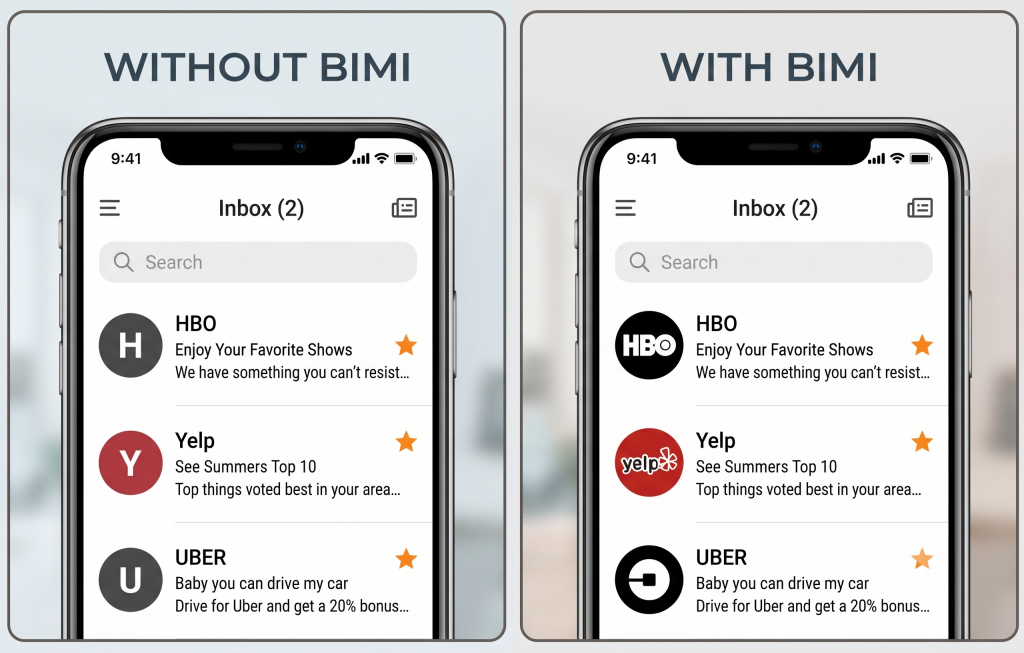
- BIMI (Brand Indicators for Message Identification): This is optional, but very helpful to obtain trust and visibility in the inbox. By using BIMI, your logo becomes a visual identifier that the email is genuinely from your brand or business.
2. Subscriber Engagement Signals
Inbox placement is heavily influenced by how recipients interact with your messages. Positive engagement signals include opening the email, clicking links, moving a message out of spam, starring it, or replying. Negative signals include deleting without opening, letting messages sit unread, or clicking the dreaded “Report Spam” button.
3. List Quality and Bounce Rates
Sending emails to invalid, mistyped, or abandoned email addresses creates hard bounces. High bounce rates tell mailbox providers that you do not maintain good list hygiene, which quickly damages your reputation.
Do You Have a Deliverability Problem?
Identifying an inbox placement issue requires looking at multiple data points rather than relying on a single metric.
Here are a few signs that your deliverability might be in trouble:
- A Sudden Drop in Engagement: If your click-through rates suddenly plummet across major domains like Gmail or Yahoo, your messages are likely getting filtered to spam.
- High Spam Complaint Rates: Google and Yahoo require senders to keep spam complaint rates below 0.1%, and never exceeding 0.3%. Crossing that threshold will cause immediate inbox placement issues.
- Spam Trap Hits or Blocklists: Getting listed on reputable blocklists, particularly Spamhaus, is a clear signal that your list acquisition or hygiene practices need immediate work.
To monitor your domain health, sign up for free tools like Google Postmaster Tools and Microsoft SNDS. These platforms give you direct line-of-sight into how mailbox providers rate your domain and IP reputation.
The Do’s and Don’ts of Email Deliverability
Over my numerous years in marketing and operations, I have seen almost every deliverability mistake in the book. Here is a quick reference guide to keep your program healthy.
- DO listen to your own data. Do not let outside tools panic you without cross-referencing your actual campaign metrics.
- DON’T assume every performance drop is a deliverability issue. Sometimes copy loses its luster, or market conditions shift. Always evaluate content alongside technical signals.
- DO use list verification tools. Clean your email list regularly to remove invalid addresses, spam traps, and catch-all domains before hitting send.
- DON’T buy email lists. Purchased lists are filled with spam traps and unengaged contacts. It is the fastest way to ruin your domain reputation.
- DO make unsubscribing easy. Use standard one-click unsubscribe headers and visible unsubscribe links. It is much better for a subscriber to opt out than to mark your email as spam.
- DON’T ignore inactive subscribers. Set up automated re-engagement workflows for subscribers who have not clicked an email in 6 months. If they remain unresponsive, remove or suppress them.
Summary and Next Steps
Reaching the inbox is not a one-time project, it is an ongoing operational process. By focusing on technical authentication, keeping your list clean, and delivering valuable content that encourages real clicks, you build a lasting sender reputation that mailbox providers trust.
Are you unsure about your current inbox placement or struggling with high bounce rates? Take a look at your domain metrics today, run a list clean-up, and make sure your SPF, DKIM, and DMARC records are fully aligned.
If you need help with email deliverability or simply want to have a conversation, make sure to reach out!