
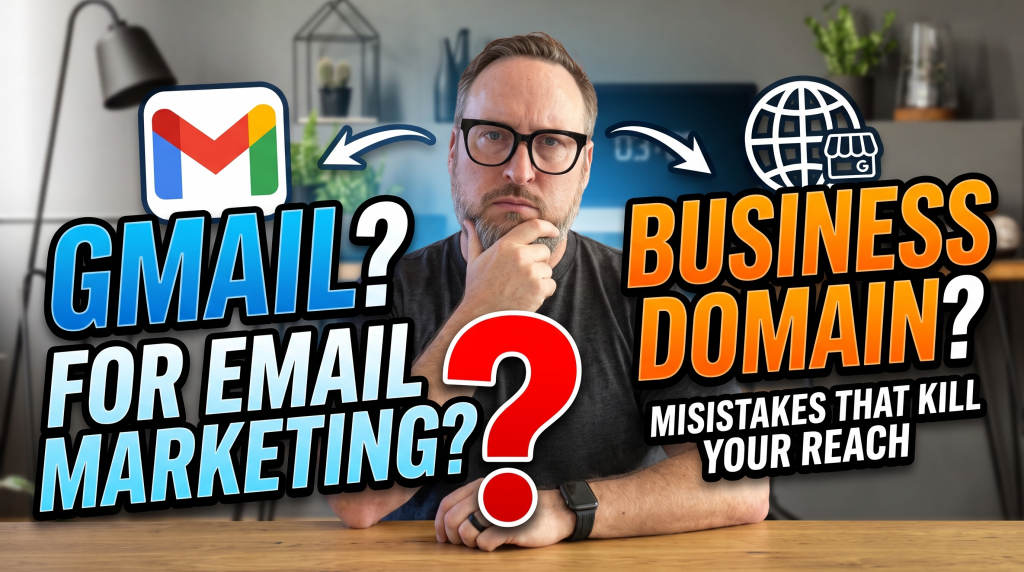
When you are starting or growing a small business, every dollar counts. You carefully weigh every expense, looking for smart ways to stretch your budget without cutting corners. It is completely understandable why many business owners start out using a free webmail account like Gmail or Yahoo for their marketing. After all, it is free, easy to set up, and you already know how to use it.
I have talked to hundreds of entrepreneurs over the years who ask me the same question: “Hank, why should I pay for a custom domain or an email marketing service when I can just BCC my customers in Gmail?”
I get it. Free feels like a win when cash flow is tight. But using a freemail address for your business marketing is like building a house on sand. It might look fine at first, but it will undermine your efforts, hurt your reputation, and prevent your messages from reaching the inbox. Let’s examine why freemail falls short and how making a small tweak will yield massive returns for your business.
The Hidden Costs of “Free”: Trust and Brand Identity
Let’s be honest about consumer psychology. When you receive an email promising a great deal or vital business information, which sender address instills more confidence?
- yourbrand@gmail.com
- name@yourbrand.com
Subscribers are much more likely to open, read, and trust messages that come from a dedicated company domain. Anyone can set up a free account in two minutes and pretend to be a business. A custom domain shows your audience that you are legitimate, established, and serious about protecting their security.
I understand that adding new expenses can feel daunting when you are watching your bottom line. The good news is that securing a domain is far less expensive than most people think. You can register a custom domain name for as little as $10 to $15 a year. Setting up a professional inbox through Google Workspace, Microsoft 365, or your domain registrar takes about 15 minutes. That tiny annual investment pays for itself the moment a prospect chooses you over a competitor because your brand looks trustworthy.
The Deliverability Trap: Why Your Emails Miss the Inbox
Beyond branding, sending marketing campaigns from a freemail account hurts your ability to reach your audience.
Inbox providers like Google, Yahoo, and Microsoft analyze billions of messages daily. To protect their users from spam and phishing, they rely heavily on domain reputation. Reputation is built over time based on how recipients interact with your mail. Do they open your emails? Do they click links? Or do they mark your messages as spam?
When you send from a @gmail.com address, you do not have an individual domain reputation. You are sharing a public domain with millions of other senders. Spam filters cannot assign a unique reputation score to your specific free address. Because filters prioritize safety, they treat bulk mail from free domain addresses as high risk.
Recent authentication requirements like DMARC, SPF, and DKIM have made this even stricter. Protocols like DMARC verify that an email actually originated from the domain listed in the “From” header. Major providers explicitly block or route to spam bulk messages sent through external platforms using free webmail addresses. If you use a free address to send marketing messages, your deliverability will suffer.
The Technical Wall: Sending Limits and Lack of Tools
If deliverability warnings do not convince you, operational limits will. Standard email accounts were built for one-to-one communication, not audience growth.
Gmail, for instance, caps personal accounts at 500 emails per 24 hours. If you have a growing list, you will quickly hit that ceiling. Trying to copy and paste contacts into small batches is a manual nightmare that wastes hours of your work week.
Dedicated email marketing platforms eliminate these restrictions while offering essential tools that free webmail simply cannot match:
- Automated List Building: You can build mobile-friendly sign-up forms and landing pages to collect leads around the clock.
- In-Depth Analytics: You can track open rates, click-through rates, and unsubscribes to see what content resonates with your audience. Free accounts leave you completely in the dark.
- Smart Automation: You can set up automated welcome series and nurture campaigns that run in the background while you focus on running your business.
- Content Assistance: Most platforms have built-in AI tools to help write copy, generate ideas, and overcome writer’s block in seconds.
Making the Switch: Practical Steps to Upgrade Your Strategy
Upgrading from a freemail account to a professional email marketing strategy is straightforward. Here is how you can do it step-by-step:
- Secure Your Domain: Purchase your domain name through a reputable registrar. Keep it clean, memorable, and aligned with your brand.
- Set Up Authentication: Configure your SPF, DKIM, and DMARC records. If technical acronyms make your head spin, don’t worry. Modern email service providers walk you through the process or handle the heavy lifting for you.
- Choose a Dedicated Platform: Move your subscriber contacts into a professional email provider that meets your needs and budget. This gives you unlimited sending capacity, design templates, and compliance tools to keep you out of trouble.
- Clean Your List: Before sending your first campaign, ensure your list consists only of people who opted in to hear from you.
Parting Thoughts
Saving a few dollars by using a free email account might seem tempting early on, but the hidden costs in lost trust, spam folder placements, and manual effort are simply too high. Investing $10 a year in a custom domain and partnering with a true email marketing platform gives your business the professional polish and inbox power it deserves.
Are you ready to stop landing in the spam folder and start growing your business with email marketing? Book a free strategy call to get the most out of your email efforts! Need help with your email campaigns? I can do that too!